

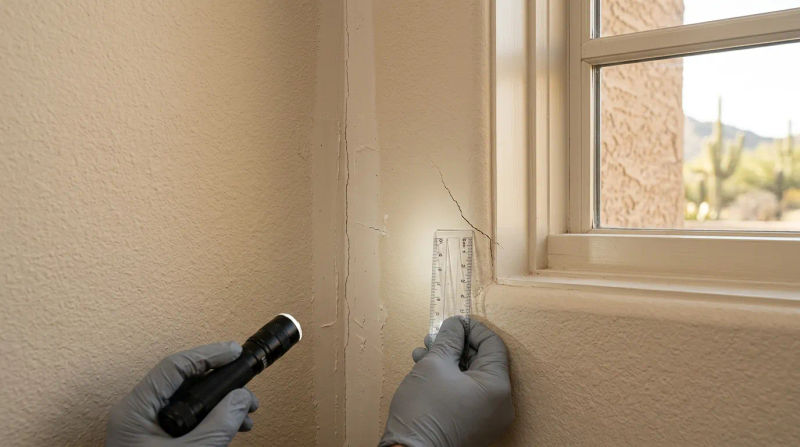
As a Senior Project Superintendent with over a decade of experience in the Tucson area, I’ve seen firsthand how our unique environment affects our homes. You might be noticing it yourself as September brings cooler nights. You walk through your living room and a thin, spiderweb-like line branching from the corner of a window catches your eye. It wasn’t there last month, or at least you don’t think it was. Is it a sign of a serious problem, or just the house “breathing”? This is one of the most common questions homeowners have, especially here in Catalina Foothills, and understanding the answer starts with knowing what to look for.
Common Signs and Symptoms
Not all drywall cracks are created equal. The first step in diagnosing the issue is to carefully observe the crack's appearance and location. Our trained crews are taught to categorize these issues to determine the root cause, a process you can begin yourself.
Here are the most common types of drywall blemishes we encounter:
- Hairline Cracks: These are very thin, straight cracks that often appear along the seams where two sheets of drywall meet or in the corners of a room. They are frequently caused by the natural expansion and contraction of wood framing due to temperature and humidity changes. While unsightly, they are usually cosmetic.
- Diagonal or Jagged Cracks: Cracks that run at a 45-degree angle, typically starting from the corners of windows and doors, are more concerning. These indicate stress points in the wall framing, which could be from normal settling or something more significant.
- Drywall Nail Pops: These aren't cracks but are often confused with them. A drywall nail pop vs a crack is easy to distinguish; a pop is a small, circular bump or cracked circle on the wall surface. This happens when the wood stud behind the drywall shrinks or moves, pushing the nail or screw head outward and breaking the surface of the joint compound. They are almost always a cosmetic issue.
- Cracks with Discoloration: If you see a yellow or brown stain accompanying a crack, it’s a red flag for moisture. This could be from a slow plumbing leak, a roof issue, or window flashing that has failed. The water source must be found and fixed before any drywall repair is attempted.
- Bulging or Bowing Walls: When a crack is paired with a section of the wall that is no longer flat, it points to a more serious problem. This could be significant water damage causing the drywall to warp or a structural failure putting pressure on the wall itself.
What Causes This Problem
Understanding the potential drywall crack causes in Catalina Foothills requires looking at our specific climate, soil, and building styles. The sprawling, custom homes built in this area, predominantly from the 1980s to the 2000s, have unique characteristics that play a role.
- Thermal Expansion and Contraction: The Sonoran Desert has significant diurnal temperature swings. A hot September day can be followed by a much cooler night. This causes the materials in your home - wood framing, trusses, and drywall - to expand and contract. This constant, subtle movement is a primary cause of hairline cracks at drywall seams and corners. It's the house adjusting to its environment.
- Low Humidity and Lumber Shrinkage: The very dry air in Southern Arizona draws moisture out of the wood framing of a house over many years. As the lumber dries and shrinks, it can pull away from fasteners, leading to drywall nail pops. This is especially common in homes that are 5-10 years old as the framing fully acclimates.
- Settling and Soil Movement: Every home settles into its foundation over time. Minor, uniform settling is normal and expected. However, the soils in our region can sometimes lead to differential settlement, where one part of the foundation moves slightly more than another. This creates stress that can manifest as hairline vs structural drywall cracks. Minor settling might create a few hairline cracks, while more significant movement will create larger, diagonal ones.
- Architectural Stress Points: Many Catalina Foothills homes from the 1980s-2000s era were designed to maximize views with large windows, sliding glass doors, and open-concept layouts. These large openings interrupt the continuous framing of a wall, creating inherent stress points above the corners. These homes also often feature complex rooflines with both flat and sloped sections, which can introduce unique loads and stress on the walls below, making them more prone to showing cracks.
- Structural Issues: While it's the least common cause, it's the most serious. Significant foundation movement can lead to widespread, large cracks. These are the cracks that demand immediate attention. If you see cracks that are wider than 1/8 of an inch, run across ceilings and down walls, or are accompanied by sticking doors and windows, it's a sign that the problem goes beyond the drywall itself.
When to Call a Professional
So, how do you decide whether to patch it yourself or bring in an expert? My field experience has taught me that it’s better to be cautious. A professional assessment can distinguish a simple cosmetic fix from a symptom of a larger issue, saving you time and money in the long run.
Consider a DIY repair if:
- You have a few isolated nail pops.
- You have one or two very thin hairline cracks along a flat wall seam that haven't appeared before.
You should call an experienced professional for an inspection if:
- Cracks Keep Coming Back: If you patch a crack and it reappears within a year, a simple cosmetic fix isn't enough. Our crews would investigate the underlying movement causing the recurring issue.
- Cracks Are Wider Than a Credit Card: A good rule of thumb is if you can fit the edge of a credit card into the crack, it's wide enough to warrant a professional opinion.
- You See Multiple Diagonal Cracks: A pattern of cracks running from the corners of several doors and windows suggests a systemic stress issue, not an isolated event.
- The Crack is Accompanied by Other Symptoms: This is the most important differentiator between hairline vs structural drywall cracks. If you also have doors that stick, windows that are difficult to open, or visible cracks in your exterior stucco or foundation slab, it’s crucial to have a professional investigate a potential structural problem.
- There Are Signs of Water: Any discoloration or moisture requires a two-part solution: find and stop the leak, then repair the damage. A qualified general contractor can manage this entire process, ensuring it's done in the right order.
An organized workflow is key. A professional will not just spackle over the crack; they will diagnose the cause, recommend the correct repair (which might involve reinforcing the area with new tape or using a flexible compound), and ensure a seamless texture and paint match.
Conclusion
Seeing drywall cracks in your Catalina Foothills home can be unsettling, but most of the time, they are a normal part of a house aging in our dynamic desert climate. The key is to learn how to read the signs. Small hairline cracks and the occasional nail pop are often just cosmetic blemishes caused by thermal movement and drying lumber. However, wide, recurring, or diagonal cracks - especially when paired with other symptoms like sticking doors - can signal a deeper issue that needs professional attention.
Don’t wait for a small crack to become a major problem. An early and accurate diagnosis is the most effective way to protect your home's value and your peace of mind.
If you notice any of these signs, contact a local General Contractor professional for an inspection.