

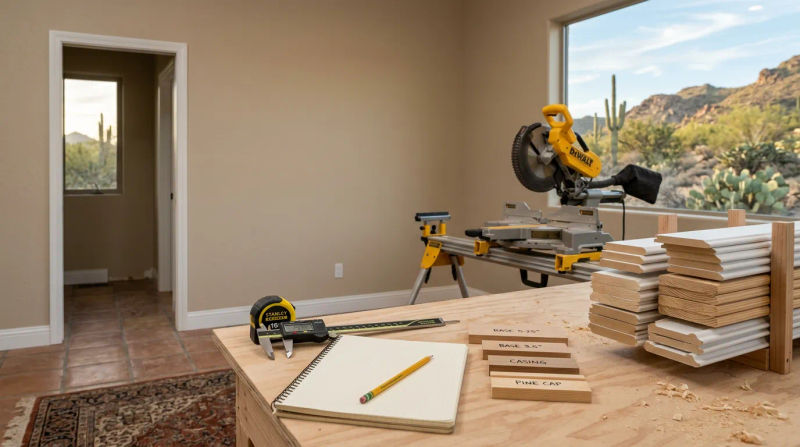
As a Senior Project Superintendent with over a decade of experience in the Tucson area, I know that one of the first questions homeowners ask about any project is, "What's it going to cost?" It's a critical question, and you deserve a transparent answer. Upgrading your home’s baseboards and door casings is one of the most effective ways to create a polished, high-end look, but understanding the budget for interior trim carpentry is key to a successful project. Especially as October evenings get shorter, many of us start thinking about indoor upgrades before the holidays. This guide will break down the real costs and factors involved so you can plan with confidence.
Average Costs in Tucson Mountains
Let's talk numbers. While every project is unique, we can establish some realistic budget ranges. The baseboard installation price Tucson Mountains homeowners can expect typically falls between $5.00 and $12.00 per linear foot, installed and ready for paint. For door casings, the cost is usually calculated per door. The door casing labor cost Arizona contractors charge, combined with materials, often ranges from $175 to $400 per standard interior door.
Here’s a general breakdown:
- Builder-Grade (MDF): For a simple, 3.25-inch MDF baseboard, you might be on the lower end of that spectrum, around $5.00 - $7.50 per linear foot. This is a popular and cost-effective option for a clean, painted finish.
- Mid-Grade (Pine/Poplar): Using solid wood like finger-jointed pine, which is great for durability, will push the cost closer to $7.00 - $10.00 per linear foot.
- High-End (Hardwood/Custom Profiles): If you're looking at stain-grade hardwoods like oak or alder, or a complex, multi-piece trim profile, the trim installation cost can easily exceed $12.00+ per linear foot.
These prices typically include labor, standard materials, caulking, and filling nail holes. They often do not include the cost of painting or removing and disposing of old trim, which can be significant variables.
Factors That Affect Price
The price ranges above are a great starting point, but several key factors will influence your final quote. In my experience overseeing projects here in the Tucson Mountains, these are the details that matter most.
- Material Selection: The biggest cost driver is the material itself. Medium-Density Fiberboard (MDF) is the most budget-friendly, but it's susceptible to water damage and doesn't hold up to impact as well as solid wood. Pine is a common mid-range choice, while hardwoods like oak, maple, or alder are premium options that offer superior durability and are ideal for a stained finish.
- Trim Style and Size: A simple, flat 3-inch baseboard is much faster to install than a tall, ornate 7-inch profile with a separate cap and shoe molding. The more complex the cuts and the more pieces involved, the more labor hours are required.
- Condition of Walls and Floors: This is a major factor in our area. Many homes in the Tucson Mountains are custom or semi-custom builds from the 1990s and 2000s, often with Pueblo or Santa Fe architectural details. In these homes, walls aren't always perfectly plumb and floors aren't always level. Our trained crews are accustomed to this; we spend the necessary time scribing the baseboard to fit tightly against uneven stucco walls or wavy drywall. This meticulous work prevents unsightly gaps but does require more skill and time than a standard installation.
- Scope of the Project: The overall size of the job matters. A single room might have a higher per-foot cost due to setup and travel time. Conversely, installing trim throughout an entire house creates efficiencies that can lower the per-foot rate. Tearing out old trim is another consideration. If existing baseboards are caulked and painted to the wall, removal requires care to avoid significant drywall damage, adding to the labor cost.
- Finishing (Painting): Will the trim be painted in place? A professional finish involves more than just a coat of paint. It includes caulking all top and side seams, filling every nail hole, sanding, priming, and applying one or two topcoats. A high-quality paint job is what makes trim work look truly complete, but it is a significant labor component that should be clearly defined in your quote.
How to Get the Best Value
Getting the best value doesn’t always mean finding the lowest price. It means getting a high-quality, lasting result for a fair investment. Here are a few tips from my years in the field.
- Bundle Your Projects: If you're planning on painting the room anyway, have the trim installed first. Combining services with one contractor can often lead to better overall pricing and a more streamlined schedule.
- Choose Materials Wisely: If you plan to paint your trim, MDF or finger-jointed pine are excellent, cost-effective choices. There's no need to pay for expensive hardwood if you're just going to cover the grain with paint.
- Get an Itemized Quote: A reputable contractor will provide a detailed estimate that breaks down the costs for materials, labor, tear-out, and finishing. This transparency is crucial for comparing bids and understanding exactly what you're paying for. A vague, one-line price is a red flag.
- Focus on the Labor: The difference between good and great trim work is the carpenter. An experienced installer knows how to make clean, tight miter joints and cope inside corners perfectly. Paying for skilled labor prevents future headaches and ensures the finished product enhances your home's value.
Questions to Ask Your Contractor
To properly vet a contractor and ensure you have a clear budget for interior trim carpentry, you need to ask the right questions. This empowers you to make an informed decision.
- Is the removal and disposal of my old trim included in the quote?
- How do your crews handle gaps caused by uneven walls or floors? (The answer should involve scribing or other professional techniques, not just relying on caulk.)
- What is your process for finishing? Does it include caulking, filling nail holes, sanding, and priming before painting?
- Are the material costs listed separately from the labor costs?
- Are you licensed and insured in Arizona? Can you provide proof?
- Who will be performing the work - your employees or subcontractors?
- What is the estimated timeline, and how will you protect my home (floors, furniture) during the project?
An experienced professional will have ready and confident answers to these questions. It shows they have standardized processes and a commitment to quality.
Ultimately, new trim is a fantastic investment in your home's aesthetic and value. Taking the time to plan your project now, as we head toward the end of the year, ensures you can get on a contractor's schedule and enjoy the results without a last-minute rush. Understanding the costs involved is the first step toward a beautiful, professional finish that you'll appreciate for years to come. For a personalized estimate for your home in the Tucson Mountains, contact Ko Construction for a free consultation.