

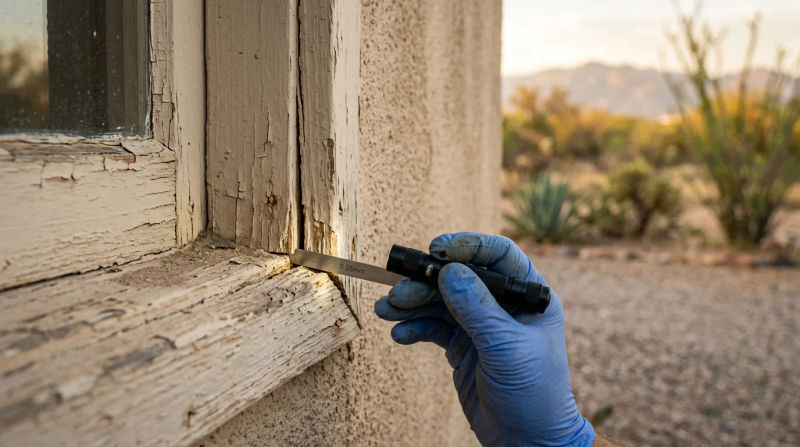
It’s a familiar story I hear from homeowners across South Tucson each October. The intense summer heat has finally subsided, replaced by pleasant days and cool, crisp nights. You’re starting to think about the holidays, maybe planning to host family, and you want your home to look its best. As you walk through the living room, you notice it for the first time - a small but distinct gap between the baseboard and the floor that you swear wasn’t there during the monsoon season.
This isn't your imagination. These subtle shifts are often the first indication that your home's interior wood trim needs attention. As an experienced project superintendent working on homes in Southern Arizona for over a decade, I’ve seen how our unique climate impacts building materials. The transition from summer humidity to the dry air of fall and winter is a critical time. Addressing these minor issues now can prevent them from becoming larger, more noticeable problems during the “closed-window” season when you’re spending more time indoors.
Common Signs and Symptoms
Before you can address a problem, you need to know what to look for. Wood trim issues often start small and can be easily overlooked. Here are seven common signs that your trim may require professional care, especially as we head into the cooler, drier months.
- Visible Gaps Along Baseboards and Floors: This is the most frequent sign. You might see a dark line appearing where your baseboard meets the hardwood, tile, or even the wall itself. These South Tucson baseboard gaps are a direct result of wood contracting in lower humidity.
- Cracked or Separating Caulk Lines: Caulk is designed to be flexible, but it has its limits. When you see the caulk line cracking in the corners or along the top of your baseboards, it’s a clear signal that the trim is moving more than the caulk can handle.
- Loose or Wobbly Door Casings: Place your hand on the trim surrounding a doorway and gently try to move it. If it feels loose, wobbly, or pulls away from the wall, it’s one of the primary door casing coming loose signs. This indicates the fasteners holding it in place have lost their grip.
- Mitered Corners Pulling Apart: Look at the corners of your window and door frames where two pieces of trim meet at a 45-degree angle. When these mitered joints begin to separate, creating a visible gap, it’s a classic symptom of wood shrinkage.
- Exposed or “Backed Out” Fasteners: Sometimes, the nails or brads used to secure the trim will appear to be pushing themselves out. In reality, the wood is shrinking away from the fastener head, leaving it exposed. You might be able to feel them if you run your hand along the trim.
- Paint Cracking at the Edges: A fine, hairline crack in the paint where the top of the trim meets the drywall is another subtle clue. Like caulk, paint isn't elastic enough to handle significant wood movement and will fracture under the stress.
- Doors Sticking or Latching Improperly: While a sticking door can have many causes, a shifting door casing is a common culprit. As the casing moves, it can put pressure on the door jamb, causing misalignment that prevents the door from closing or latching smoothly.
What Causes This Problem
Understanding the root cause of these issues is key to implementing a lasting solution. In our region, it’s rarely due to a single factor, but rather a combination of environmental and structural elements.
The primary driver is Arizona seasonal wood movement. Wood is a hygroscopic material, meaning it naturally absorbs and releases moisture from the air. During Tucson’s humid monsoon season, wood trim absorbs moisture and swells slightly. As fall arrives and we turn on our heating systems for the first time, the indoor air becomes exceptionally dry. The wood releases its stored moisture and, in turn, shrinks. This constant cycle of expansion and contraction is what causes gaps to open, fasteners to loosen, and joints to separate.
This effect is particularly noticeable in the beautiful, modest homes that characterize much of South Tucson. Many of these single-story ranch and bungalow-style houses were built during the post-war boom of the 1950s. After more than 70 years, the original solid wood trim and plaster walls have experienced thousands of these seasonal expansion-contraction cycles. Over time, this repetitive stress can weaken fastener connections and amplify the effects of natural settling.
Finally, the initial installation methods play a role. While sturdy, building practices from that era didn't always account for the dramatic humidity swings introduced by modern, powerful HVAC systems. What was once a stable installation can now show signs of stress.
When to Call a Professional
Some minor trim issues can be handled by a confident DIYer, while others are best left to experienced professionals who can ensure a durable and aesthetically pleasing result.
DIY-Friendly Tasks: If you're dealing with a very fine hairline crack (less than 1/16th of an inch) in a caulk line, re-caulking is a manageable project. Be sure to use a high-quality, paintable, and flexible caulk to allow for future movement. Filling a few exposed nail holes with wood putty is also a straightforward task.
When to Contact an Expert: We recommend calling a qualified professional for a wood trim repair when you encounter the following:
- Gaps Wider Than a Credit Card: Large gaps can’t be effectively filled with caulk. This often indicates the trim needs to be carefully removed, reset, and re-fastened to the wall for a secure, lasting fit.
- Multiple Problem Areas: If you’re seeing loose casings on several doors, widespread baseboard gaps, and separating corners throughout your home, it points to a systemic issue. Our trained crews can perform a thorough assessment to address the problem comprehensively, rather than just patching symptoms.
- Trim is Damaged or Splitting: If the wood itself is cracked, split, or damaged, it requires skilled carpentry to repair or replace the section seamlessly.
- You Desire a Flawless Finish: Achieving a professional, invisible repair requires specific tools and techniques. Our technicians follow organized workflows to properly secure the trim, fill and sand all fasteners, and expertly caulk all seams to create a finish that looks clean and will withstand future Arizona seasonal wood movement.
Conclusion
Those small gaps and cracks in your wood trim are more than just cosmetic blemishes; they are your home’s way of communicating with you. They tell a story about how your house is responding to our unique Southern Arizona climate. Paying attention to these signs in the fall is the best way to get ahead of issues before they worsen over the winter.
Taking a proactive approach to trim maintenance not only keeps your home looking sharp for holiday guests but also protects the integrity of your walls and finishes. A small adjustment today can prevent a much larger, more complex repair down the road.
If you notice any of these signs, contact a local general contractor for an inspection. A professional can help you diagnose the extent of the issue and recommend the best course of action.